It’s been one year since I began the Mousehold. What started as a general kidlit blog has turned primarily chapter book focused. I guess that’s where reading hundreds of chapter books gets you. One of my friends suggested a “Top 5” sort of deal, which I liked. I can cover a large amount of the books I’ve read over the last year and commit myself to reading another three hundred or so before next year. How else is this going to become a regular anniversary post?
But I can’t just settle for one top 5 list. We gotta go bigger than that. Like, five at least.
What follows is my own personal opinion on books I’ve read over the last year or so. There’s a lot of chapter books out there, and I’ve barely scratched the surface.
Top 5 Chapter Book Series
In no particular order. This list was really hard to make:
Franny K Stein, Mad Scientist – I’ve only read four of the ten books so far, and Fran still made this list. I think it’s something to do with the premise. Franny is unapologetically a mad scientist, and the author sticks to the bit the whole time. Seeing kidlit morals through the lens of a character who casually creates abominations and rewrites history is hilarious. I don’t think I’ve seen a series with a premise that lets the main character get away with the kind of stuff Fran can. It’s amazing.
Dragon Masters – I really didn’t want to put this series on the list, but I can’t stop reading it. I don’t even know that it’s that good, but I actively keep picking up books. Maybe it’s the cliffhangers, maybe it’s the cool new dragons, maybe it’s seeing how the author keeps shoehorning Drake into every adventure despite there being like six dragon masters at the castle. There’s something about this series that keeps me coming back.
Marisol Rainey – Sure maybe Hello, Universe is good, but I still haven’t finished that and I have finished all of these. Why don’t chapter books win awards again? I’ve never seen a series drag a normal problem on for an entire book as well as Marisol. She’s just so interesting that she makes anything instantly interesting by association. On the grand scheme of things, absolutely nothing happens every book and it’s the coolest thing ever. Marisol frets about climbing a tree for an entire book, then kind of does. Marisol frets about a kickball game the entire book, then it gets rained out. Marisol frets about a neighborhood dog the entire book, ending in the most terrifying normal encounter with a dog I’ve ever read. Also the naming scheme for the books is super cool. I can’t wait to see what word the author repeats next.
Clementine – Actual tear-jerker. I’ve cried during at least half the books so far. Like Franny, there’s something about the premise of an inner-city quirky kid like Clem that really gets me. We get to see a really close snapshot of her life, and all the characters in it are super cool. We get to see her dad running the apartment complex they live in. We get to see her family literally have a kid and the aftermath. We see many of the tenants in the complex and her school. Also, you know, Clementine herself is the one who makes every book’s premise work. I haven’t read the spinoff series Waylon yet (I still need to finish Clem 6 and 7), but I hope he continues filling out the picture of this very small part of fictional Boston.
The Adventures of Sophie Mouse – The series that started this blog. Even my writing tablet is named Sophie. Probably a guilty pleasure at this point, but also twenty-one books can’t be wrong. My comfy casual escape into kidlit land. Everything is super chill and nice. All the problems are pretty tame, but very real to a kid like Sophie, which makes them real to me. Book 21 just came out recently, and I couldn’t get to the bookstore fast enough. Still the best art I’ve seen in a kidlit series. Bell knocks it out of the park every time.
Top 5 Chapter Books
Individual books that I still can’t forget about. That’s usually my metric for “good”. They don’t have to be the tip of the top award-winning writing:
Itty Bitty Princess Kitty – The Sweet Shop – Itty’s friend opens a new sweets shop, but there’s a problem. It’s in the kingdom of Lollyland where there’s a Goodie Grove with bushes of cotton candy and rivers of syrup. And personal fairies in households to make sweets for you. Not exactly the best place for a sweets shop. This is the most interesting plot based on setting I’ve ever read. Being steeped in the setting from having read all 12 books before it, it hit even harder. I was immediately in and curious how they’d make the shop successful. The answer didn’t disappoint.
Owl Diaries – Eva’s Big Sleepover – Eva decides to have a sleepover and even invites her frenemy Sue Clawson. A lot. And Sue keeps saying no. A lot. This book almost got me to rate it, which I never do. I was on the edge of my seat, rooting for Sue to not go to Eva’s party at all. I thought this book was going to be about not bothering people that don’t want to be bothered. Not pushing someone for a response if they don’t want to give it. But no, Sue had a reason and ended up going to the party once that reason was addressed. A bit of a letdown, but at least Sue didn’t go easily.
Pizazz vs the Future – A lot of reasons I loved the final Pizazz book. Pizazz finally has a reason to care and gets a glow up to match. The environmental plot was handled very comedically and only hit me over the head with morals because it made it even funnier. The final boss being beaten by the mean girl being selfish was the cherry on top. A+
Stink: Solar System Superhero – It’s an entire book about Pluto maybe not being a planet anymore. And it works. After failing his planets test, Stink convinces his teacher to hold a class-wide debate about Pluto. They spend an entire chapter making up mnemonics to remember the planets. Mean girl Riley Rottenberger has one of the rawest scenes in a chapter book ever, when her team holds a funeral for Pluto in front of everyone before school. A lot of the reviews of this book are pretty divisive, given the science behind the issue, but I think they handled it well.
Dragon Masters – Land of the Spring Dragon – I know I’m talking about Dragon Masters again, it’s crazy. Like I briefly mentioned in my consistency article, consistency can make inconsistent things stand out. This is a prime example of that. Usually Dragon Masters books follow a pretty specific formula. Drake and another Dragon Master go to a new land to find a new Dragon Master. The Dragon Master usually doesn’t know their dragon yet, then they find it. Land of the Spring Dragon does a lot of stuff different, and it’s a breath of fresh air. Drake goes by himself. The Dragon Master (Breen) is well aware of her dragon. She forces Drake to cross into a fae realm full of weird tests to prove he’s worthy enough to meet them. It’s all very Irish and folklore-y and super cool. We actually get to see some of Drake’s character beyond having a dragon and being brave too. A little.
(Honorable Mention) Daisy Dreamer – Sweet Dreams! – The final Daisy Dreamer book is absolutely mind-blowing. I can’t talk about it without massive spoilers, which is why it’s an honorable mention:
Click for super amazing Daisy spoilers.
Chapter 1 starts with Daisy and her imaginary friend Posey getting ready to celebrate her “Dream Day” party. Then she wakes up in chapter 2 and the entire chapter is basically the exact same as book one’s chapter 1. Word for word. Picture for picture. Daisy wakes up, walks downstairs and eats breakfast with her parents. She still has memories of the events of the past eleven books, and starts to wonder if any of it even happened. She goes to school (like she does in book one) and nobody she talks to has any memory of what she’s talking about. This continues for the whole book, til the last few chapters where it’s revealed what’s been happening and Daisy (and the reader) realizes they haven’t been gaslit the entire series. What a crazy way to go out. Something I think only this series could get away with.Top 5 Chapter Book Lines
This list was harder than the series list. A few of these are full exchanges, or have lines added for context:
Daisy Dreamer has so many good lines, but I could only pick one. Ask me about the others sometime:
“Have no fear, Detective Daisy has it under control,” I tell everyone at the table. “I’ll get to the bottom of this blanket mystery, even if I have to go undercovers.”
I think about this line all the time and crack up every time I think about it. This line, from the first chapter of book 1, exemplifies everything about Daisy’s character. She’s imaginative and a huge cornball. The blanket mystery she’s mentioning is from a fake article in her fake newspaper she made so she could read the newspaper with her dad at breakfast. The Detective Daisy persona is like the fifth persona she’s taken over the first few pages. The joke even “gets a great laugh from my parents” so they’re probably not even humoring her, the joke is legit funny.
Pizazz has a lot of great ones too. I really like dry British humor. Here’s the bit with the best one:
I decided I wouldn’t actually tell anyone what was wrong because if they really cared they would just know, and gently lure it out of me with hot chocolate and sympathetic looks and pizza. So I went straight to my room and shut the door and decided I would stay there, in my room, on my own, until someone bothered to find out that my life was RUBBISH.
Another great character-establishing segment from book 1. Pizazz is only 9 1/2, but she acts like a teenager. She’s a superhero that could care less about heroism and more about her school life. This line in particular comes after a “bad day” at school, which is only bad because one of her classmates talked a lot, she had gunk in her eyes from waking up that she didn’t notice, and a few other nothing events.
An excerpt from Mirabelle Wants to Win:
Tiny potion bottles winked back at me from the floor, glittering.
Daring me.
This gave me chills when I first read it. Mirabelle’s a mischievous girl, always trying to come up with excuses to mess around or experiment with potions. With eleven books and counting, the author has to come up with a lot of prose about this. This is the best of the bunch. No excuses, no misguided reasoning, just pure mischief. Mirabelle in a bottle. Never underestimate the power of line breaks, kids.
Judy Moody’s a real American hero in book 6:
“Time for lunch,” said Dad. “I need a coffee.”
“Not tea?” asked Mom.
“Just being loyal to my country,” Dad said.
“Can I try coffee?” asked Judy. “I want to be loyal to my country, too.”
“Dream on,” said Dad.
“How about tea?”
“How about chocolate milk,” said Dad.
“The Boston Chocolate Milk Party. How UN-Revolutionary.”
What a kid thing to want and what a Judy way to handle it. “I want to be loyal to my country, too.” is probably the best excuse I’ve ever heard. In a later book, she gets the opportunity to drink coffee, and makes her younger brother Stink drink it first. He says it tastes like tree bark. The line after implies she doesn’t drink it after him. Amazing.
Marisol sets the mood in book 1:
Now that everyone is in place and it’s dark-dark outside and everything is quiet, the pity party can begin.
And what a mood. Judy eat your heart out. This line comes at the end of a page, opposite a picture of Marisol in bed with all her plush cats (and one real one). I had no idea what was coming on the next page, and in true Marisol fashion, it’s nothing:
Yes, Marisol is feeling quite sorry for herself.
But that’s the thing about pity parties: they aren’t satisfying if you don’t feel at least a little sad for yourself.
And then the chapter ends. Dead silence. You don’t get to hear about the pity party. It’s all in her head. So cool.
Top 5 Chapter Book Characters
I knew this one would be too hard to just pick, so I put my favorite character from twenty-eight series I read into a tournament-style bracket. You know when you flip a coin, you realize the decision you want to make before it lands? This is like that, in battle form. I didn’t actually think about who would win in a fight, just who I liked more in each “match”.
Then I couldn’t get past the second round. So I threw the bracket out and picked five. And not a single mean girl! I’m proud of myself. Or disappointed. I’m not sure which.

Pippa Hedgehog (The Adventures of Sophie Mouse) – To the surprise of nobody. Is it fair to pick a favorite character primarily on art and character design? Maybe.
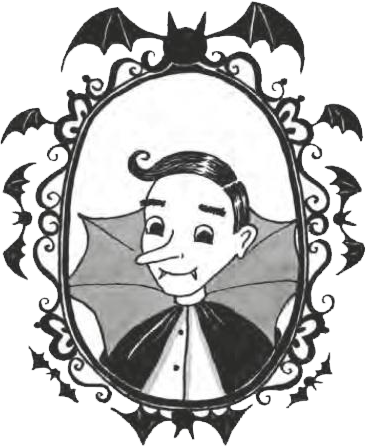
Count Bartholomew Moon (Isadora Moon) – I laugh every time he says or does anything. He’s always fretting about his hair or annoyed that he has to go out during the day or disgusted at the non-red things other people eat. And this doesn’t stop at his family either. He’ll make comments at his wife and daughter about these kinds of things, because what’s a vampire to do? Life just isn’t perfect all the time and that’s not very good for your looks.
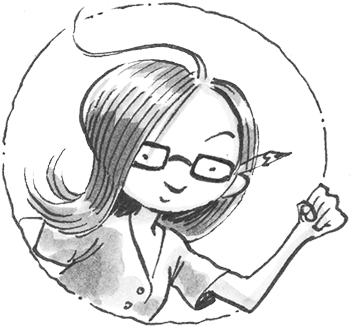
Amy Namey (Judy Moody) – The second Amy showed up, she was immediately more interesting than Judy. She remains so to this day. She wears two watches (cooler than a shark shirt), she wants to be a reporter (something she can actively pursue and does, unlike Judy’s doctor goal), her favorite color is blue (which is better than purple). She even has an awesome secretary’s desk after the events of that one book. Way cooler than a bunk bed. And Stink got a spin off series before her? Very not rare.
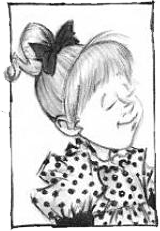
Lucille (Junie B. Jones) – This is how you do a one-note character correctly, people. Lucille is rich, and everything she does and says shows it. The best part is, she isn’t one-dimensional about it. That’s just her entire life and is all she knows. She lives in a giant mansion, which we actually visit in a few books. Her parents are basically never around, and we only see her grandmother, who spoils her. Her less-than-rich friends Junie and Grace become constant comparison points for how nicer her clothes are or how much better the food she eats is. We even see her “mature” when she enters first grade, becoming very passive and bored with everything. She’s done and seen it all already. She’s been better than everyone for a whole grade, she doesn’t feel the need to state it (as much) anymore. It’s just a fact.
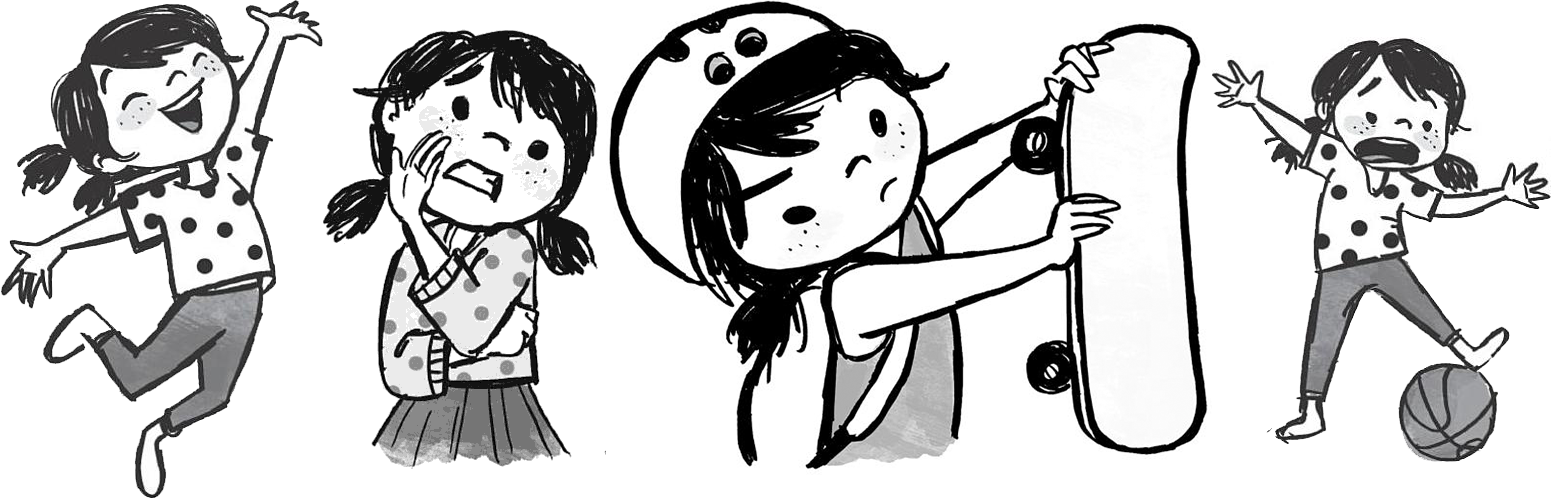
Daisy Dreamer (Daisy Dreamer) – The best thing about Daisy is her expressions. Both verbal and facial. Her facial expressions get super diverse, as you can see above. Mostly she’s just really happy all the time, which is great.
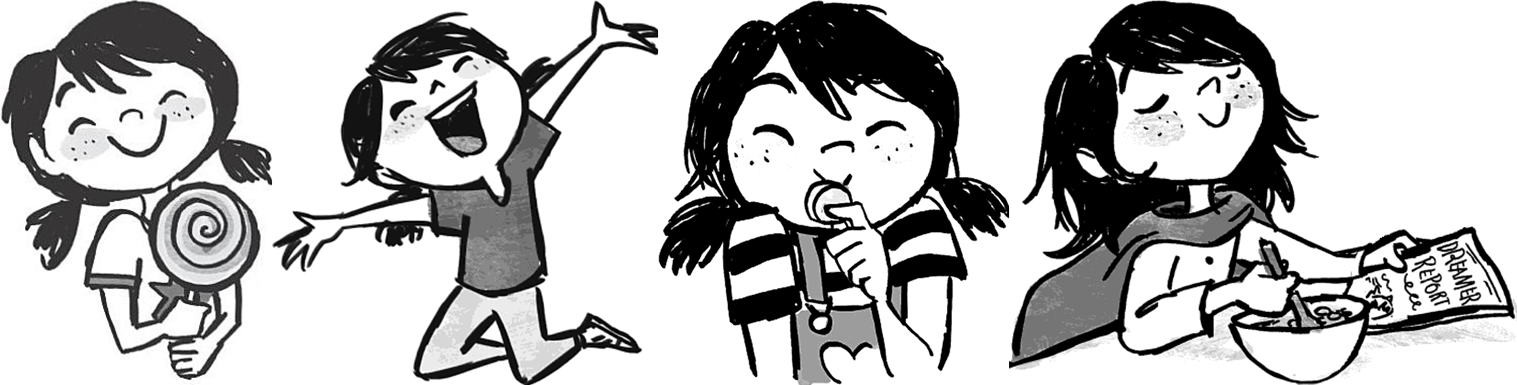
With such an over-the-top character, the first-person text follows suit. Everything is overly descriptive. Nothing sounds out of place when Daisy’s the narrator:
Commentary on others:
Everyone freezes like ice cubes.
This makes their eyebrows go way, way, way up.
Commentary on herself:
I hold up my hand so high I could touch the sky.
I lean over and peer underneath. My pigtails go upside down.
Then I slump into a blob on the floor and blob down the stairs and blob into the den. I am blobbing toward the kitchen when Mom hands me the phone.
Her catchphrase “obviously” even makes sure you’re along for the ride. Everything in Daisy’s world is normal, obviously:
Cats make the best fashionistas! Obviously.
Posey needs a nosey and a perfect goofy smile. And antlers. Obviously.
Top 5 Chapter Book Conclusions
They’re all pretty good so far. If you didn’t see a series represented here, it’s probably because I haven’t read it yet. Or maybe it didn’t make the cut. Doesn’t mean it’s not good. I don’t think I’ve read a chapter book series yet I’ve actively disliked. Magic Tree House is a bestseller for a reason. Go read it. Ivy+Bean is stellar and there’d better be a book 13. The Princess in Black 11 comes out in a few days, so why not catch up on the other ten?
Character is king. Have you noticed that 90% of chapter book titles are the main character’s name? There’s probably a reason for that. Without an interesting, relatable, admirable character to follow, a chapter book wouldn’t have too much to stand on.
Humor is queen. I don’t think I’ve read a “serious” chapter book. Or at least one lacking humor. If characters are the hook, humor is the line and sinker of chapter books. I’m constantly impressed with how funny so many of these series are. Like legitimately funny, not just “funny to a kid”. As a writer of chapter books myself, I keep a running document of “Cool Stuff in Children’s Lit”. Every time something makes me really laugh, I write it down. That document is currently twenty-five pages long, largely in part to laughs.
Series length ≠ quality. Staying power, maybe. Selling power, likely. But I’ve found shorter series to be just as good, if not better, than longer series. Longer series tend to be more focused on “problem of the week” or “character of the week”. They flesh out characters and the world little by little, if at all. It’s kind of the curse of a long-running series, lest they run out of material. A shorter series may not have new releases due to sales, but some I’ve read, like Princess Pulverizer, are only intended to be so many books long.
Hardbacks are hard to acquire. That must be why “hard” is in the name. Chapter books tend to be very thin and made of rice paper. Finding undamaged copies isn’t easy. Keeping them undamaged doesn’t make it easier. Looking for new copies in bookstores or online doesn’t guarantee anything. That makes hardcover copies very valuable for my collection. They’re also bigger than their paperback kin, which means the art is bigger!
Too bad they normally only happen for a first print run, and usually only to stock in libraries. Your series has to be pretty popular to have an active orderable stock of hardbacks. Even if you can order them, they’re two to three times as expensive as the paperback versions. At least it makes hunting in secondhand auction lots and in used bookstores more fun. If you’re lucky it will even still have the dust jacket and not have library labels.
Onto Year Two!
Here’s to another year of chapter books. I’ve got a lot of unread books on my shelf, and even some new types of articles planned. Let’s see where another three-hundred books takes us.
 The Mousehold
6 thoughts on “Five Top 5 Chapter Book Lists (Mousehold 1 Year Anniversary)”